Converge Bio
Wed, Aug 26, 2026 · 2:00 PM EDT
Live webinar

Simulation Before Pipetting

In-silico target discovery with the ConvergeCELL™ patient foundation model.

Join Iddo Weiner, PhD, Co-founder & CSO of Converge Bio, for a live look at ConvergeCELL, a patient-level foundation model trained on 46.5M cells across 9,843 patients, 927 studies, and 400+ diseases. See how in-silico perturbation turns single-cell and bulk RNA-seq into cell-type-resolved target and biomarker hypotheses, validated on held-out lupus, myeloma, and sepsis cohorts.

Wednesday, August 26, 2026
2:00 PM EDT · 9:00 PM IDT
0
Days
00
Hours
00
Minutes
00
Seconds

Save your seat

Free to attend. Recording sent to all registrants.

Your details are used to send the join link and the recording. Never shared, never used for model training.

What you'll learn

Where target discovery starts when the patient is the unit of modeling

A technical session for computational biologists and translational R&D teams, followed by live Q&A.
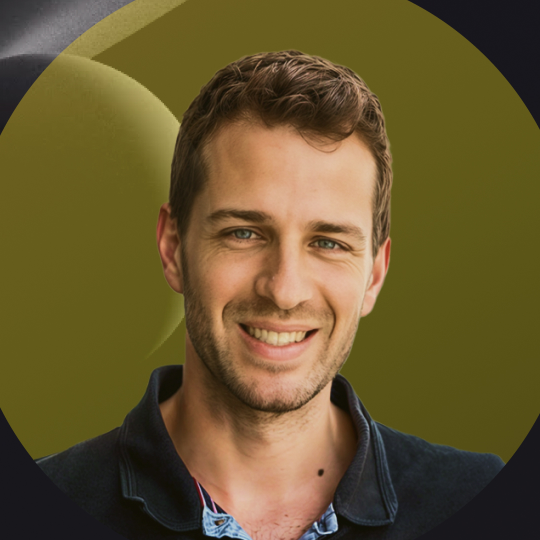
Your presenter
Iddo Weiner, PhD
Iddo Weiner, PhD
Co-founder & CSO, Converge Bio

Leads the research behind Converge Bio's foundation models for the life sciences, from antibody design to patient-level cell-state simulation.

01

A patient-level foundation model, not a cell-level one

Entire patient samples live in one embedding space, trained on 46.5M cells across 9,843 patients, 927 studies and 400+ diseases.

02

In-silico perturbation

Simulate gene and drug perturbations to generate mechanism-of-action hypotheses, and anticipate drug response and resistance before wet-lab work.

03

End-to-end discovery

From raw single-cell or bulk RNA-seq to cell-type-specific gene attribution, in one pass.

04

Results on held-out cohorts

Validated on lupus, multiple myeloma and sepsis, matching or beating differential-expression, ML and PaSCient foundation-model baselines.

05

The model release

What's shipping, which modalities are supported, and how to run it on your own cohorts.

The model behind the session

ConvergeCELL™ is trained on the largest patient-level single-cell corpus assembled to date.

46.5M
Cells
9,843
Patients
927
Studies
400+
Diseases